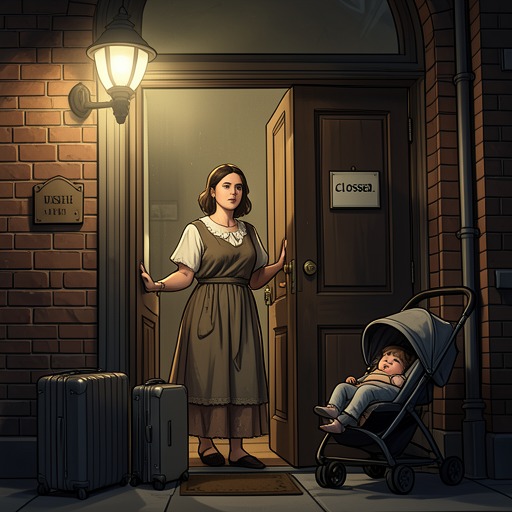
Divorce
Tiny Beautiful Things: Advice on Love and Life from Dear SugarDivorce is presented not as a single clean break but as a family change whose consequences differ sharply for spouses, children, and the people trying to form relationships afterward. The accounts move between private letters and Cheryl Strayed / Sugar’s memories: separation can end a destructive home life, yet it can also leave a child grieving a parent who remains alive, unsettle an adult child’s trust, or expose how hard it is to begin again.
A separation with more than one aftermath
In one letter, a man looks back on the collapse of his twenty-year marriage without being able to assign fault to himself, his wife, or society. He and his wife had married in the 1980s, when both were too immature, he believes, and spent years avoiding the unhappiness between them. The marriage’s end is therefore described less as a sudden event than as the eventual outcome of a long, unaddressed strain.
The letter also follows what came after the split. Over the next three years, he had a casual relationship, a serious one, and then a new relationship. At first, he was candid with the casual partner that he did not want to settle down. The second relationship became more complicated: when she wanted greater seriousness, he ended it, then returned and promised to consider a future together. After avoiding the word love for a year, he used it, but struggled to make the commitments he felt the word implied. His hesitation ultimately cost him both a lover and a friend.
With his current partner, he describes a different route into commitment. They had been dating for about four months; she was in the middle of a bitter divorce and had not been seeking a new commitment. Although they each initially found that arrangement appealing, neither wanted to date multiple people, and they became exclusive. Both appear to be approaching love without naming it. For him, the word carries the weight of promises he has seen prove fragile, making the aftermath of his own marriage part of his new partner’s story as well as his own.
Childhood after Cheryl Strayed’s parents divorce
Cheryl Strayed / Sugar recalls her own parents’ divorce as a decisive change in childhood. She describes Cheryl Strayed’s mother’s decision to leave Cheryl Strayed’s father when Cheryl was six as probably the single best thing that happened to her. Her parents had married quickly after Cheryl Strayed’s mother became pregnant at nineteen; they had three children over the next nine years. The home had been marked by Cheryl Strayed’s father’s violence and meanness, but the child’s attachment to him persisted alongside her fear and distress.
That attachment made the separation painful in a way the adult narrator does not simplify. When Cheryl Strayed’s mother finally left, Cheryl begged her to return to Cheryl Strayed’s father, believing that the end of the marriage would mean losing her dad. In the aftermath, she saw him only three times, on short visits, and describes her childhood as largely fatherless. She and her siblings lived in inexpensive apartment buildings among other children of single mothers, many of whom also had little contact with their fathers. A few times each year, letters addressed to the children in their father’s handwriting arrived in the mailbox. The letters gave the siblings a recurring point of contact, but did not restore the daily relationship that had disappeared.
The recollection holds two consequences together: leaving was protective, and the child still experienced the loss as abandonment. That tension matters to the book’s treatment of divorce. A decision can be necessary for a parent’s and children’s well-being without making the child’s grief less real or less complicated.
An adult child facing a parent’s new life
A separate advice letter concerns an adult whose parents have decided to divorce after the father left the mother for a younger woman. The writer had been close to the father and regarded him as a role model. Learning that he had concealed the relationship and lied to the family damages that trust; the writer is hurt and angry, but also wishes for the old relationship to return. The father’s new relationship and his changed approach to being a parent make that wish difficult to reconcile with present circumstances.
Sugar’s reply distinguishes the father’s conduct as a husband from his possible capacity as a father. She does not excuse the deception or dismiss the writer’s anger. Instead, she advises an honest conversation in which the adult child names the hurt and the wish to rebuild, while also listening to the father’s account. The affair belongs primarily to the relationship between the parents, she argues; the child was caught up in its concealment, but need not treat the betrayal between spouses as proof that the father is incapable of being trustworthy in their own relationship.
The proposed repair is neither instant forgiveness nor a return to the former arrangement. The father should not be let off the hook, but the relationship should not be kept permanently on it either. The adult child is encouraged to ask what the new relationship means to the father and where the child fits in his life now. Divorce here changes the terms of a bond that continues, making honesty and renegotiation more realistic aims than recovering an untouched past.
Separation, commitment, and the future imagined
Another letter shows how a partner’s return to an earlier marriage can shape someone who was not herself divorcing. A woman in her late thirties recalls that her boyfriend of three years, with whom she lived, went back to his ex-wife just as the couple were considering buying a house. He had previously concluded, after therapy, that he wanted to build a life and have children with the letter writer. When he left, he said the decision was for the sake of his eight-year-old child, and suggested that he might return after the child went to college. The letter writer was thus left facing a possible ten-year wait while the man resumed his previous family life.
She spent years recovering from that relationship and later dated someone else, but that relationship also ended after her partner proved unwilling to take a leap of faith. As she considered becoming a single mother, she faced not only the approach of the end of her fertility but the prospect of giving up the future she had imagined: having a child with a partner and marrying as many of her friends had. Her account places divorce and separation within a wider field of family expectations. A former spouse’s return to a family can be framed as care for a child, yet it can leave a new partner suspended between promised plans and a life that never arrives.
Marriage that persists without closeness
The book also sets divorce beside a long marriage that has not ended. A professional who owns a business describes being married for more than twenty years and having four children. The first half of the marriage seemed ideal to the writer, but over roughly the last decade the spouses grew apart and came to live peacefully more like siblings. Neither was happy, yet they stayed together for the children. This account does not establish a divorce; instead, it shows that marital dissatisfaction and separation are not interchangeable states. The contrast with marriages that do end sharpens the book’s broader picture: a family may be reorganized by departure, by continued but diminished cohabitation, or by the effort to rebuild a relationship after the marriage has changed.
Across these stories, Divorce names a transition rather than a guaranteed resolution. It can remove a child from a harmful home while leaving longing intact; it can expose an adult child to a parent’s secrecy; and it can reshape the expectations with which former spouses and new partners approach commitment. The book’s recurring emphasis is on acknowledging those distinct effects instead of treating the legal or marital break as the end of the family story.